



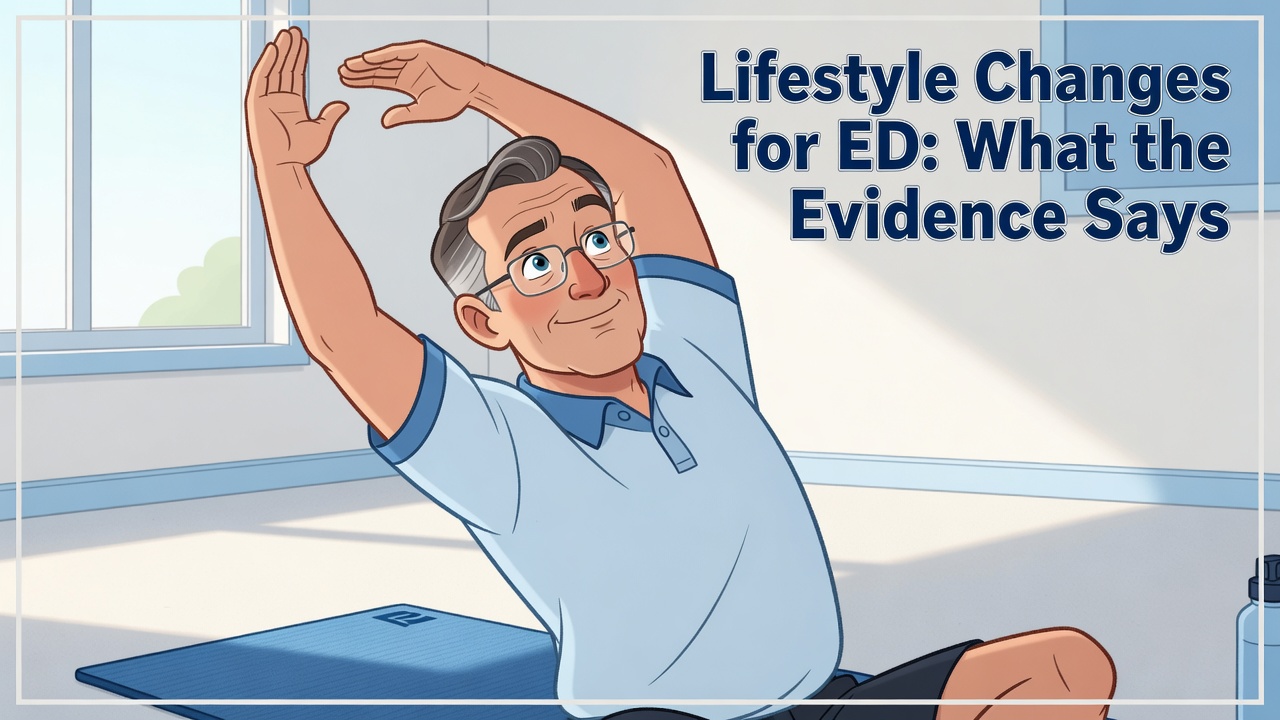
Lifestyle Changes for ED: What the Evidence Says
Short Version
- Erection problems can share risk factors with heart disease, so general health is worth a closer look.
- Regular exercise, a heart-friendly diet and weight management may improve erectile function for some men.
- Quitting smoking and limiting alcohol are changes that may ease ED over time for some men.
- Even if habits improve, talking to a doctor is sensible because ED can occasionally signal other conditions.
Many men start by looking at lifestyle changes for ED when erection problems appear, and that instinct has reasonable support behind it. Erections depend on healthy blood vessels, working nerves, balanced hormones and a settled mind, so everyday habits that affect blood flow and mood can also affect sexual function. As the NHS explains, erection problems are common and often come down to a mix of physical and psychological causes rather than one single thing.
This article brings together what several major health organizations say about the connection between daily habits, erectile function and heart health. It’s educational only. What it can’t do is tell you what’s causing your symptoms, or replace a conversation with a doctor or another qualified clinician.
Suggestion
- Move most days – even a brisk 30-minute walk supports blood flow.
- Eat more whole foods, nuts and leafy greens; go easy on alcohol.
- Protect sleep and manage stress – both affect performance.
Why Erection Problems May Point to Heart Health
Erection problems and heart health are closely linked because erections rely on blood flowing freely through small arteries. The CDC lists high blood pressure, smoking, diabetes, excess weight and physical inactivity among the recognized risk factors for heart disease. Several of those same factors are also linked to erection problems.
Erectile dysfunction can be an early warning sign of current or future heart problems, according to Mayo Clinic. The reason may be simple anatomy: the arteries supplying the penis are narrower than larger blood vessels such as the coronary arteries, so restricted blood flow may show up in erections before it shows up anywhere else.
A review on PubMed Central of erectile dysfunction and cardiovascular disease describes the same picture from the research side: the two conditions share risk factors, and in some men erection problems may appear earlier than other signs of cardiovascular disease. None of this means that every man with ED has heart disease. It’s one reason, though, that doctors take these problems seriously rather than treating them as purely a private inconvenience.
Exercise, Movement and Blood Flow for ED
Physical activity is one of the most consistently discussed habits for erectile function, and major guidelines treat it as more than an afterthought. The American Urological Association guideline on ED identifies lifestyle modification, including increased physical activity, as an approach that may improve erectile function for some men. Mayo Clinic similarly lists a lack of exercise among the factors that may raise the risk of ED.
Aerobic activity such as brisk walking, swimming or easy-paced cycling is the kind most often discussed, because it supports the heart, blood vessels and weight management at the same time. One caveat: Mayo Clinic notes that prolonged bicycle riding may compress nerves and temporarily affect blood flow to the penis. If cycling is your main activity and symptoms started after long rides, that detail is worth mentioning to a doctor.
Anyone who has been inactive for a long time, or who has known heart risk factors, should check with a doctor before starting a new exercise program. That’s general safety advice, not a reason to avoid movement altogether.
Diet, Weight and Lifestyle Changes for ED
Diet and weight sit near the top of the list of lifestyle changes for ED that researchers have studied, which makes sense given the overlap with heart health. The CDC counts obesity, diabetes and unhealthy diets among the risk factors for heart disease, and Mayo Clinic lists obesity as a risk factor for ED as well.
The American Urological Association guideline discusses weight management and dietary change as part of lifestyle modification, with the general message that improvements in overall metabolic health may also support erectile function in some men. Because the CDC names unhealthy diets as a heart disease risk factor, shifting toward a style of eating built around vegetables, fruit, whole grains and fish, the kind commonly described as heart friendly, is a natural extension of the same advice. Specific diets have mixed evidence, and no single eating plan suits everyone.
Weight is worth singling out because it touches several risk factors at once. For men with obesity, gradual and sustained changes in weight may improve measures such as blood pressure and blood sugar. The AUA guideline suggests these same lifestyle changes may improve erectile function for some men. There’s no promise attached here: results vary, and weight is one factor among many.
Smoking, Alcohol and Other Habits That May Affect ED
Smoking is linked to ED because it restricts blood flow through veins and arteries, and both major health organizations name it as a risk factor. Mayo Clinic lists it among the risk factors for ED, and the NHS also names it as a possible contributor to erection problems. According to the NHS, not smoking is among the steps that may reduce the risk of erection problems, which makes quitting one of the lifestyle changes for ED with the clearest logic behind it. The framing from both organizations is gradual: changes like this may reduce problems over time rather than overnight.
Alcohol gets a similar but gentler treatment in most guidance. The NHS lists heavy drinking among the causes of erection problems, and Mayo Clinic notes that alcohol use can be a contributing factor. Limiting how much you drink may therefore help over time, especially if drinking is regular rather than occasional.
Recreational drugs belong in the same conversation. The NHS includes drug use among the causes of erection problems, and Mayo Clinic lists drug or alcohol use, particularly long-term heavy use, among factors linked to ED. And if cutting back feels difficult, that itself is worth raising with a doctor, who can point you toward practical support.
Everyday Lifestyle Changes for ED: Sleep, Stress and Mood
Not every contributing factor is physical in the obvious sense. The NHS lists stress, anxiety, depression, relationship difficulties and plain tiredness among the causes of erection problems, and Mayo Clinic names psychological conditions such as stress, anxiety and depression among causes and risk factors as well. Mood, sleep and sexual function are tightly connected, which is why the lifestyle changes for ED that matter most for one man may have nothing to do with diet or the gym.
Poor or short sleep can feed into this loop, because running on too little rest tends to worsen stress, low mood and energy levels, all of which the NHS connects to erection difficulties. Chronic stress may also nudge habits in the wrong direction, toward more drinking, more late nights and less exercise.
Where stress, anxiety or low mood seem to be playing a large part, psychological support is a recognized option rather than a last resort. Mayo Clinic’s treatment overview describes counseling as one of the approaches for ED when psychological factors contribute, and the NHS notes that talking therapies can help where the causes are psychological. Some men find their general wellbeing improves once pressure and sleep are addressed, whether or not they ever meet criteria for a formal diagnosis.
Questions Anyone?
Can lifestyle changes improve erectile dysfunction?
Lifestyle changes may improve erectile dysfunction for some men. The American Urological Association’s guideline identifies lifestyle modifications, including increased physical activity and weight management, as measures that may improve erectile function. At the same time, ED can have causes that habit changes don’t touch, such as medication side effects, hormone problems or anxiety, so results differ from person to person and no outcome is certain in advance.
How long do lifestyle changes for ED take to work?
There is no single, reliable timeline for how long lifestyle changes for ED take to work. Fitness, blood pressure and weight tend to change gradually, so thinking in weeks and months rather than days is more realistic than expecting quick results. Mayo Clinic notes that ED can have several causes acting at once, which is one reason two men can make similar changes and see different outcomes. Be cautious with any product or program that promises fast, certain results.
Can ED be an early sign of heart disease?
Sometimes ED can be an early sign of heart disease. Mayo Clinic notes that erectile dysfunction can be an early warning sign of current or future heart problems, partly because the penile arteries are narrower than larger vessels such as the coronary arteries. And a review on PubMed Central reports the same association across studies. That doesn’t mean every man with ED has heart disease, but it’s a genuine reason to mention symptoms to a doctor rather than keeping them private.
Should I still see a doctor if lifestyle changes help?
Yes, it is still sensible to see a doctor if lifestyle changes help. The NHS advises seeing a GP if erection problems keep happening, since they can occasionally be linked to conditions that need attention. Mayo Clinic’s treatment overview describes a range of options for ED, including oral medicines, so even when habits are helping, a doctor can check for underlying causes and discuss further support. Habit changes and medical care work best as partners, not substitutes.
When to See a Doctor
Talk to your doctor before you start, stop, or change any treatment, and if symptoms are new, persistent, or getting worse. Seek emergency care right away if you have chest pain, fainting or severe dizziness, an erection lasting more than 4 hours (priapism), or any thoughts of suicide.

By Info Men’s Health Editorial Team
Reviewed against medical sources on 2026-09-19.
Info Men’s Health is an independent education site; our Editorial Team reviews every article against primary medical sources. This is not medical advice.
Sources
- NHS: causes, treatments and when to see a GP for erection problems
- Mayo Clinic: ED symptoms, causes and the link to heart disease
- Mayo Clinic: ED diagnosis and treatment options
- CDC: cardiovascular risk factors
- PMC review: current diagnosis and management of erectile dysfunction, including the cardiovascular link
- American Urological Association: ED clinical guideline
Medical disclaimer: This article is for informational purposes only and is not a substitute for professional medical advice, diagnosis, or treatment. Always consult a qualified clinician about your individual situation.