



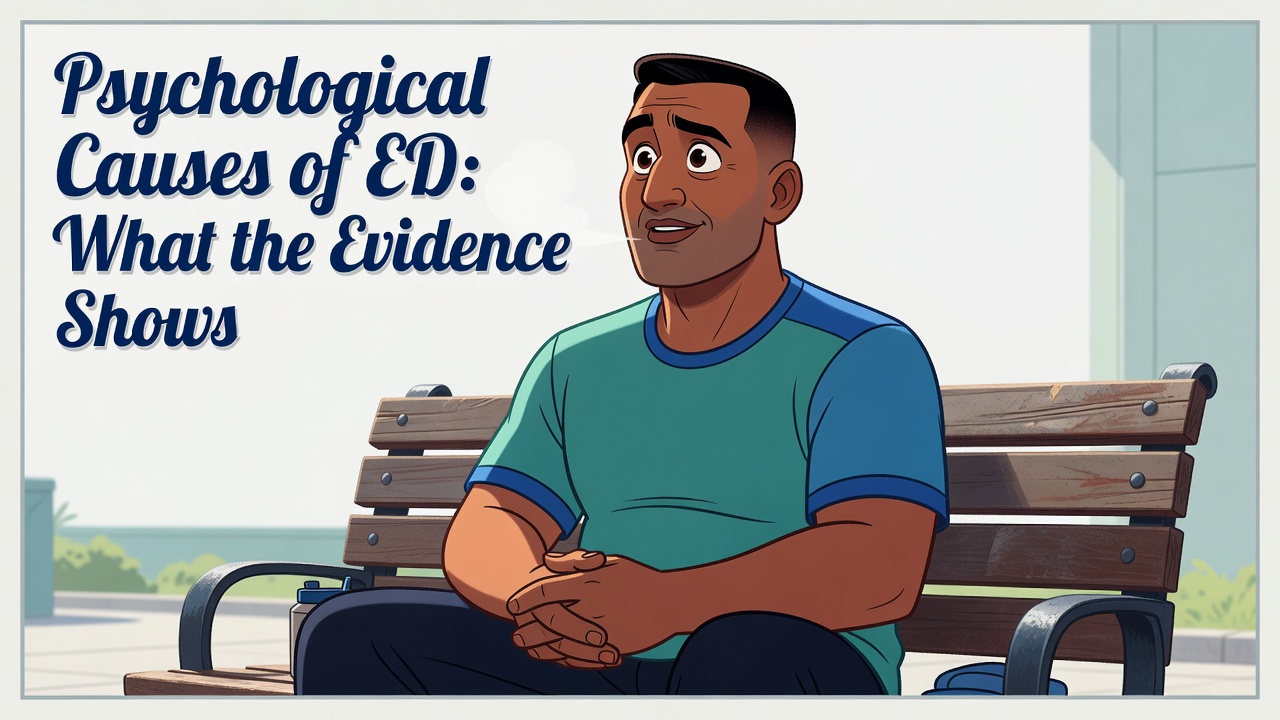
Psychological Causes of ED: What the Evidence Shows
Short Version
- Stress, anxiety, depression, and relationship difficulties are among the psychological causes of ED recognised by the NHS and Mayo Clinic.
- Performance anxiety may create a self-reinforcing cycle that keeps erection problems going even after the original trigger has passed.
- Talking therapies such as CBT and couples counselling may help when psychological factors are playing a role, though individual outcomes vary.
- A doctor can help determine whether psychological or physical factors are driving the problem, or whether a combination of both needs to be addressed.
The psychological causes of ED are recognized by the NHS and other leading health authorities as a significant contributor to erectile difficulties in men of all ages. Mental and emotional factors can be just as disruptive as cardiovascular disease, diabetes, or hormonal imbalances to the chain of brain signals, nerve responses, and blood flow that makes an erection possible.
According to the NHS erection problems guide, psychological causes frequently occur alongside physical ones rather than in isolation, and identifying the primary driver can make a real difference to which approach a doctor may suggest. The sections below cover the main psychological contributors and available treatment paths, drawing on guidance from established clinical sources.
What Are the Psychological Causes of ED?
The psychological causes of ED include depression, anxiety, stress, relationship difficulties, and low self-esteem. The Mayo Clinic ED causes overview identifies these as key contributors that can carry as much clinical weight as physical disease, and for many men the cause is a combination of psychological and physical elements working together rather than a single clear-cut factor.
Psychological factors may be especially prominent in younger men who haven’t yet developed the vascular or hormonal conditions more common in middle age and beyond. A clinician will typically evaluate both physical and psychological possibilities when a man presents with persistent erectile difficulties, since addressing only one side of a combined problem may produce limited results.
Suggestions
- Move most days – even a brisk 30-minute walk supports blood flow.
- Eat more whole foods, nuts and leafy greens; go easy on alcohol.
- Protect sleep and manage stress – both affect performance.
How Stress and Anxiety Cause Erectile Difficulties
Stress causes the body to release hormones including adrenaline and cortisol, which narrow blood vessels and reduce the blood flow to the penis needed for an erection. According to the NHS guidance on erection problems, work-related stress, personal worries, and anxiety about sexual performance are all recognised triggers for erectile difficulties. A single episode caused by a particularly stressful period can set off a pattern of worry that persists even after the original stressor has passed.
Generalised anxiety keeps the nervous system in a state of heightened alertness, suppressing the relaxation response that sexual arousal requires. The brain is the starting point of the arousal chain, and preoccupation with worry or fear can disrupt or blunt the nerve signals that initiate and sustain an erection before they take full effect.
How Depression Affects Libido and Sexual Function
Depression can affect sexual function in several ways, and the Mayo Clinic notes that it may contribute to erectile dysfunction. A persistently low mood typically reduces interest in sex; beyond libido, the fatigue, negative self-image, and emotional withdrawal associated with depression can dampen the neurological and hormonal signals involved in arousal. According to the Mayo Clinic on ED causes, some antidepressant medications can also produce sexual side effects that compound the problem for some men.
The relationship can run in both directions. When erectile difficulties develop, the experience can generate shame, damaged self-confidence, or feelings of inadequacy that deepen a depressive episode, which in turn makes sustained arousal harder to maintain. Recognising this cycle can help a clinician decide on the most appropriate form of support.
Performance Anxiety: The Self-Perpetuating Cycle of ED
Performance anxiety can sustain erectile difficulties long after the original cause has resolved. When a man encounters an unexpected erection problem, perhaps after drinking alcohol, during a period of extreme fatigue, or at the start of a new relationship, he may start to monitor his sexual response closely rather than simply experiencing it. That self-monitoring generates anxiety, and that anxiety makes it physiologically harder for an erection to occur, reinforcing the very fear that triggered the difficulty.
The American Urological Association ED guideline identifies psychogenic factors, which include performance anxiety, as a distinct clinical category that warrants specific assessment. For many men caught in this cycle, the underlying physical mechanism may be functioning normally. The obstacle is a learned pattern of anticipatory fear that a trained clinician may be able to address through structured psychological support.
Relationship Problems as a Contributor to Erectile Difficulties
Unresolved conflict, poor communication about sexual preferences, lack of emotional closeness, and deep-seated resentment can all create conditions in which arousal becomes difficult. According to the NHS erection problems resource, relationship problems are a recognised contributor to erectile difficulties and may benefit from couples counselling or sex therapy as part of the overall approach.
A clinician may also note whether the difficulty is situational. If a man can achieve an erection in some circumstances but not others, for example during masturbation but not with a partner, this pattern can indicate that psychological or relational factors are playing a primary role. Past sexual trauma, feelings of guilt about sexual activity, and sustained anxiety about a partner’s expectations can all form part of the emotional context that feeds into erection difficulties.
Treatment Options When Psychological Causes of ED Play a Role
When a healthcare professional determines that the psychological causes of ED are the primary driver, or are significantly amplifying an underlying physical issue, a range of evidence-informed options may be considered. The Mayo Clinic ED treatment overview lists psychotherapy and sex therapy as recognised approaches, noting that a trained therapist may help a man work through anxiety, depression, and relationship issues that contribute to sexual difficulties. Individual outcomes vary, and no single approach suits every situation.
Cognitive behavioural therapy (CBT) may help men identify and challenge the thought patterns that sustain performance anxiety. Couples counselling can open communication about sexual concerns that partners may find difficult to raise on their own. The AUA erectile dysfunction guideline recommends that clinicians assess for psychological and interpersonal factors as part of a thorough evaluation and that these be addressed within the overall treatment plan. For some men, combining psychological support with a medical treatment may produce better outcomes than either approach on its own, though a qualified doctor is best placed to advise on the appropriate combination for a specific individual.
Since psychological and physical causes frequently coexist, speaking with a GP or specialist is the most reliable starting point. A clinical professional can help determine whether the psychological causes of ED in a particular case are primary, secondary, or part of a broader picture that warrants further investigation before any treatment pathway is agreed.
Questions Anyone?
Can stress alone cause erectile dysfunction?
Yes, stress alone can cause erectile dysfunction in many men. According to the NHS erection problems page, psychological stress is a well-recognised cause of erectile difficulties, particularly when it is prolonged or intense. Stress hormones narrow blood vessels and interfere with the nerve signals involved in arousal. A doctor will typically still check for physical contributors, since stress may also lower the threshold at which an underlying vascular or hormonal condition begins to cause noticeable difficulties.
How Do Clinicians Distinguish Psychological from Physical Causes of ED?
Clinicians typically begin with a detailed medical and sexual history, asking about when the problem started, whether it occurs across all situations or only some, and whether spontaneous erections during sleep or on waking are still present. According to the Mayo Clinic ED diagnosis guidance, the preservation of nocturnal erections can suggest the physical mechanism remains intact, pointing toward a psychological rather than physical cause. Blood tests and blood pressure assessments may also be used alongside this history to build a more complete clinical picture.
Is Performance Anxiety a Recognised Psychological Cause of ED?
Yes, performance anxiety is widely recognised in clinical practice as a psychological cause of erectile difficulties. The AUA ED clinical guideline identifies psychogenic ED, a category that can include performance anxiety, as a distinct type warranting specific evaluation. Many men find that their difficulties occur primarily in high-pressure sexual situations rather than consistently across all circumstances, a pattern clinicians often associate with an anxiety-driven mechanism rather than a purely physical one.
What Talking Therapies Are Used for Psychological Causes of ED?
Several options may be recommended depending on the individual’s circumstances. The Mayo Clinic on ED treatment mentions psychotherapy, including cognitive behavioural therapy (CBT), as a recognised approach for addressing anxiety, negative thought patterns, and relationship issues that can underlie sexual difficulties. Couples counselling or sex therapy may be suggested where relationship dynamics are thought to be a contributing factor. The NHS also references counselling as an option for men whose erectile difficulties have a psychological component, and a GP can help identify which type of support may be most suitable for a given individual.
When to See a Doctor
Talk to your doctor before you start, stop, or change any treatment, and if symptoms are new, persistent, or getting worse. Seek emergency care right away if you have chest pain, fainting or severe dizziness, an erection lasting more than 4 hours (priapism), or any thoughts of suicide.

By Info Men’s Health Editorial Team
Reviewed against medical sources on 2026-09-23.
Info Men’s Health is an independent education site; our Editorial Team reviews every article against primary medical sources. This is not medical advice.
Sources
- NHS: causes, treatments and when to see a GP for erection problems
- Mayo Clinic: ED symptoms, causes and the link to heart disease
- Mayo Clinic: ED diagnosis and treatment options
- CDC: cardiovascular risk factors
- PMC review: current diagnosis and management of erectile dysfunction, including the cardiovascular link
- American Urological Association: ED clinical guideline
Medical disclaimer: This article is for informational purposes only and is not a substitute for professional medical advice, diagnosis, or treatment. Always consult a qualified clinician about your individual situation.