




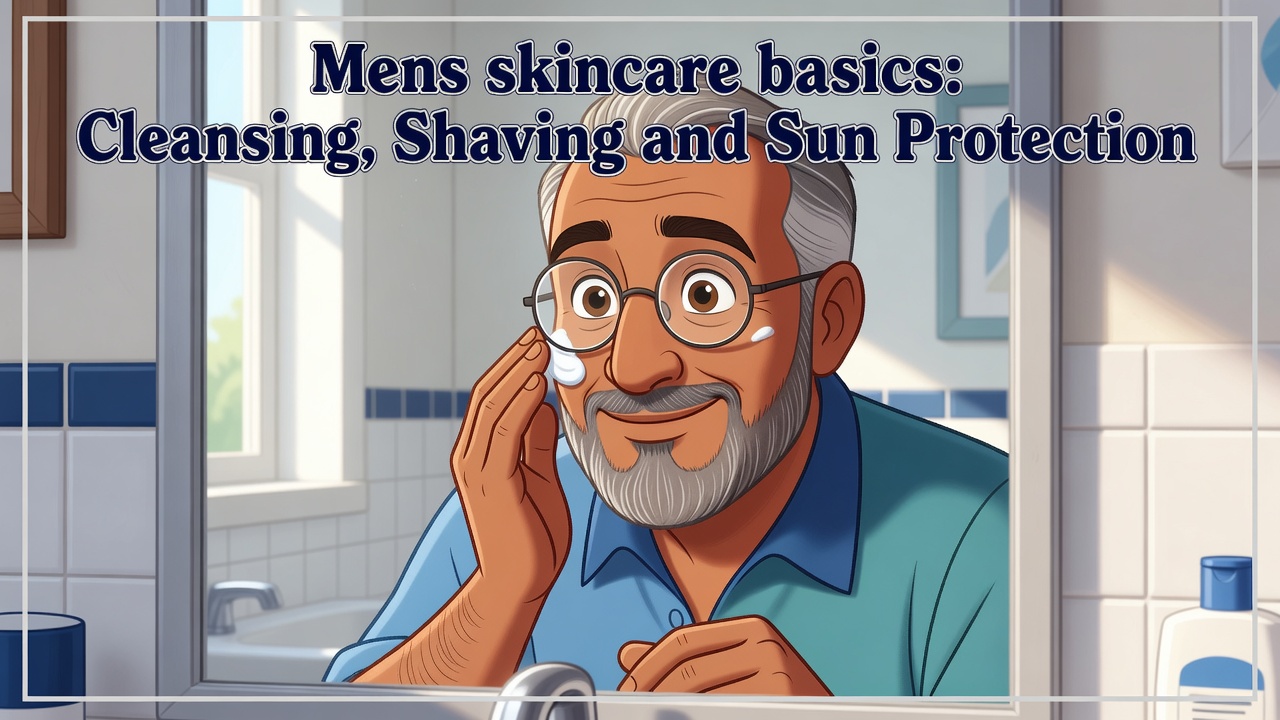
Mens skincare basics: Cleansing, Shaving and Sun Protection
Short Version
- Gentle cleansing twice a day may help maintain skin balance without over-stripping natural oils.
- According to NHS guidance, shaving in the direction of hair growth may help reduce the risk of razor bumps and ingrown hairs.
- The FDA recommends broad-spectrum sunscreen with SPF 15 or higher, reapplied every two hours during outdoor activity.
- A consistent routine of cleansing, shaving care, and sun protection can support long-term skin health for most men.
Mens skincare basics reduce to three evidence-supported steps: consistent cleansing, careful shaving technique, and daily sun protection. All three address skin concerns that tend to worsen quietly over years if left alone.
Skin care is not a niche concern. The skin is the body’s largest organ and its first line of defence against environmental stressors such as ultraviolet radiation, pollution, and physical friction. For men who’ve never followed a deliberate routine, starting with mens skincare basics is a practical entry point that takes little time and calls for only a small selection of products.
Suggestion
- Small daily habits beat one big fix – move, sleep and eat consistently.
- Track how you feel over weeks, not days.
- Talk to a clinician before changing anything that matters.
Why Men’s Skin Is Vulnerable to UV Damage, Dryness, and Irritation
Men’s skin does not become less vulnerable to sun damage, dryness, or irritation simply because skin care is often overlooked. UV exposure has cumulative effects that build up quietly over years. According to CDC sun safety guidance, ultraviolet radiation from the sun may cause skin damage and can raise the risk of skin cancer over time, making early protective habits worthwhile for men of any age.
Men’s skin tends on average to be somewhat thicker and produce more sebum than women’s, because of androgens such as testosterone. Oilier skin may be less prone to early surface dryness but can be more susceptible to clogged pores and congestion if not cleansed regularly. These differences are worth bearing in mind when selecting products, though the foundations of mens skincare basics apply regardless of skin type or tone.
Regular shaving adds a layer of physical maintenance that most women’s routines don’t include, introducing daily friction and the potential for follicle disruption. Treating shaving as a skin care step rather than a separate grooming task helps explain why technique matters as much as the products used.
How to Cleanse Skin Without Stripping Its Natural Balance
Harsh cleansers and vigorous scrubbing can strip too much of the skin’s natural oils, weakening its moisture barrier and making it more reactive over time. The Mayo Clinic’s acne information advises using a gentle, non-abrasive cleanser and avoiding hard scrubbing, which can aggravate acne-prone skin rather than improve it.
Washing with lukewarm water is generally preferable to hot water. Very hot water can strip lipids from the skin surface, contributing to tightness, redness, and a feeling of dryness after washing. After cleansing, patting the face dry with a clean towel rather than rubbing it reduces friction on the skin surface.
Mayo Clinic skin care guidance also notes that limiting baths or showers and using gentle products may help maintain the skin’s natural balance. Over-cleansing can prompt the skin’s oil glands to produce more sebum in response, potentially worsening the congestion or oiliness it was intended to address.
Shaving Technique: How to Reduce Razor Bumps and Ingrown Hairs
Shaving in the direction of hair growth, using a clean, sharp blade, and softening the skin with warm water beforehand are the most effective steps for reducing razor bumps and ingrown hairs. Razor bumps and ingrown hairs develop when cut hairs curl back into the skin rather than growing outward. NHS guidance on ingrown hairs states that shaving in the direction of hair growth may help reduce the risk of ingrown hairs and razor bumps. Softening the skin and hair beforehand, for example by washing with warm water, helps the blade glide more smoothly and may reduce the number of passes needed.
Using a clean, sharp blade matters more than many men might expect. A dull razor tends to require multiple passes over the same area to cut the hair effectively, which increases friction and the likelihood of irritating the skin surface. Shaving gel or foam provides lubrication that allows a cleaner stroke, and rinsing the blade frequently during use prevents product and hair buildup that reduces its effectiveness.
After shaving, applying a fragrance-free aftershave balm or moisturiser may help calm immediate redness and restore some of the surface moisture the process removes. Men who shave the neck area may find this step particularly useful, as neck skin tends to be more susceptible to post-shave irritation than the cheeks or chin.
Sunscreen: SPF Level, Broad-Spectrum Coverage, and Reapplication
The FDA’s guidance on sunscreen recommends selecting a broad-spectrum product with an SPF of 15 or higher and reapplying it every two hours during outdoor exposure. Sunscreen is the step most commonly absent from men’s routines, yet cumulative UV damage is among the more preventable long-term skin concerns. For men who spend extended time in direct sun, a higher SPF formulation may offer additional protection.
The term “broad-spectrum” means the sunscreen filters both UVA and UVB rays. UVB rays cause sunburn, while UVA rays penetrate more deeply into the skin and are associated with longer-term aging and damage. Both types are worth covering, and the broad-spectrum label confirms the product addresses them.
The NHS sun safety guidance emphasises applying sunscreen generously and not overlooking commonly missed areas such as the ears, the back of the neck, and the lips. Applying too little may significantly reduce the effective protection level compared with what the product’s SPF testing assumes.
Sunscreen alone may not be sufficient during prolonged outdoor exposure. The CDC sun safety page recommends combining sunscreen with shade-seeking and protective clothing for more complete protection against skin damage, noting that no single measure provides complete UV coverage.
How to Build a Men’s Skincare Routine That Fits Into Real Life
Mens skincare basics can realistically be completed in under five minutes each morning: a gentle face wash, a shave on days when needed, and a broad-spectrum sunscreen or SPF-containing moisturiser before going outside. The routine that becomes automatic is the one that actually works. In the evening, a brief cleanse removes the day’s accumulation of sweat, sunscreen residue, and environmental particles.
Moisturising after cleansing, particularly if the skin feels tight or dry, can help maintain the skin surface’s protective integrity. Applying a lightweight formula while the skin is still slightly damp after washing may improve its effectiveness, since it helps retain existing moisture rather than sitting on a fully dry surface.
Product complexity isn’t the aim. Consistency over weeks and months tends to produce more noticeable results than expensive products used sporadically. Starting with three straightforward products and using them every day is a more practical foundation than a large collection that proves hard to sustain.
Questions Anyone?
How often should men wash their face?
For most men, morning and evening cleansing covers what the skin needs throughout the day. The evening wash is often the more important of the two, clearing away sunscreen, sweat, and pollution before the skin enters its overnight repair phase. After intense exercise or heavy sweating, a rinse with plain water can freshen the skin without requiring a full lathered cleanse on top of the regular routine.
What SPF level is recommended for everyday use?
The FDA recommends broad-spectrum sunscreen with an SPF of 15 or higher for routine daily use. Men who spend extended periods outdoors, live in high-UV climates, or have lighter skin that burns more easily may benefit from SPF 30 or SPF 50 products. The FDA also notes that no sunscreen blocks 100 percent of UV rays, so reapplication every two hours during outdoor activity matters regardless of how high the SPF number on the label reads.
How can men reduce razor bumps and ingrown hairs when shaving?
Blade maintenance and shave spacing are two areas worth considering alongside general technique. Replacing blades more frequently, rather than waiting until they feel noticeably dull, can reduce the number of passes required over each area and lower the risk of follicle disruption. Men who experience persistent bumps may find that switching from a multi-blade cartridge razor to a single-blade option helps, since fewer blades mean fewer repetitive contacts with the skin per stroke. When the skin feels persistently irritated, allowing a day or two between shaves can give the skin surface time to settle before the next session.
Do men need a moisturiser as part of a basic skin care routine?
A moisturiser is not strictly essential for every man, but it can be a practical addition for those who notice tightness or flakiness after cleansing or shaving. The main function of a moisturiser is to slow water loss from the skin’s surface rather than to add water directly to it. Men with oily skin sometimes skip this step on the assumption that added moisture will worsen oiliness, but a gel-based or water-based formula is unlikely to cause that problem and may support the skin’s protective barrier without feeling heavy on the skin.
When to See a Doctor
Talk to your doctor before you start, stop, or change any treatment, and if symptoms are new, persistent, or getting worse. Seek emergency care right away if you have chest pain, fainting or severe dizziness, an erection lasting more than 4 hours (priapism), or any thoughts of suicide.

By Info Men’s Health Editorial Team
Reviewed against medical sources on 2026-09-20.
Info Men’s Health is an independent education site; our Editorial Team reviews every article against primary medical sources. This is not medical advice.
Sources
- NHS: ingrown hairs and razor bumps – causes, treatment, prevention when shaving
- NHS: sunscreen and sun safety for skin protection
- Mayo Clinic: acne symptoms and causes
- Mayo Clinic: skin care – 5 tips for healthy skin
- FDA: sunscreen – how to help protect your skin from the sun
- CDC: sun safety to prevent skin damage and skin cancer
Medical disclaimer: This article is for informational purposes only and is not a substitute for professional medical advice, diagnosis, or treatment. Always consult a qualified clinician about your individual situation.
