




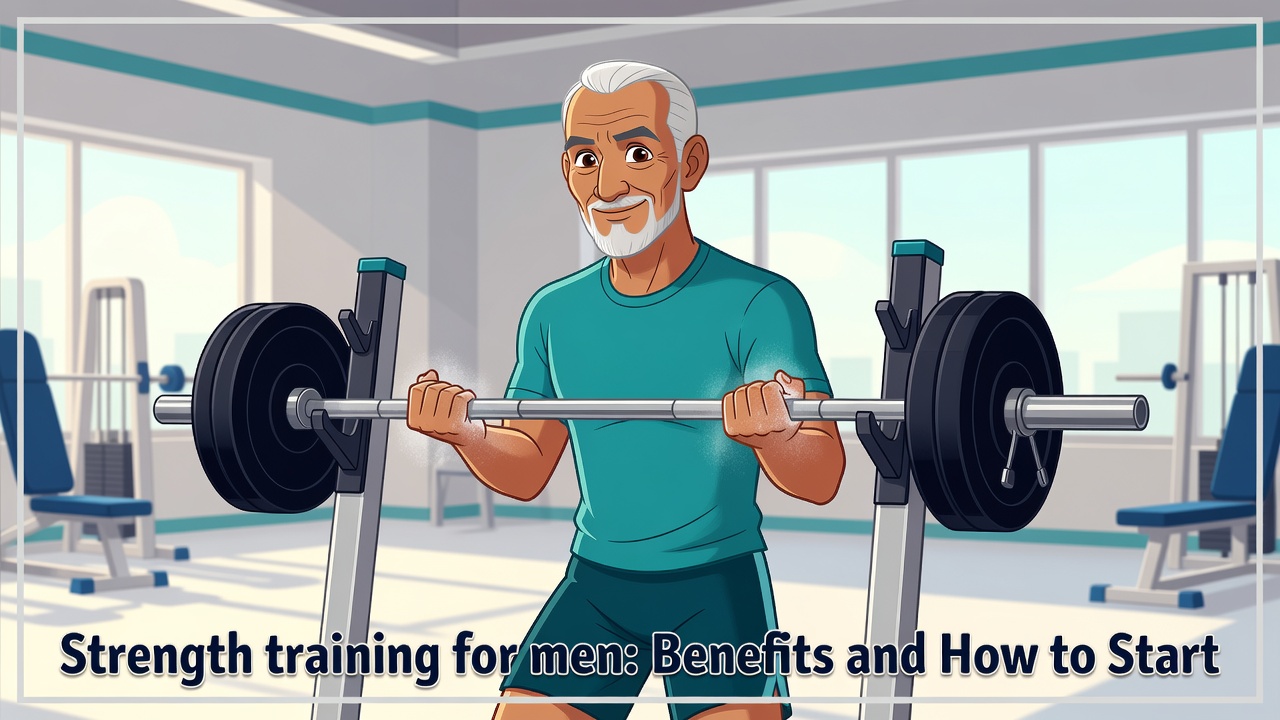
Strength training for men: Benefits and How to Start
Short Version
- Two sessions of muscle-strengthening exercise per week may be a practical starting point for most adult men.
- Regular resistance training may help support bone density and could reduce risk factors for conditions such as back pain and type 2 diabetes.
- Beginners can start with minimal equipment, focusing on technique and consistency before gradually increasing load.
Strength training for men is one of the most well-studied forms of exercise. Major health organisations including the CDC, the NHS, and the Mayo Clinic all include resistance work in their official physical activity guidance. Whether the method is free weights, resistance bands, or bodyweight movement, the principle is the same: muscles adapt to progressive load, and those adaptations extend well beyond what is visible in a mirror.
Starting a programme is often more accessible than it appears. A gym membership isn’t a prerequisite, and many early adaptations can emerge within the first several weeks of consistent effort. This article draws on published guidance from leading health authorities to explain the documented benefits, what the weekly recommendations say, and how to approach those first sessions safely.
Suggestion
- Small daily habits beat one big fix – move, sleep and eat consistently.
- Track how you feel over weeks, not days.
- Talk to a clinician before changing anything that matters.
What Strength Training Does to the Body
Strength training builds muscle through hypertrophy: muscles placed under sufficient load undergo microscopic stress, and the body repairs those fibres in a slightly thicker, stronger configuration during the recovery period. Over weeks and months of consistent work, this produces measurable gains in both muscle size and functional strength.
Bone tissue responds to mechanical stress too. According to the Mayo Clinic strength training guide, regular resistance exercise may help maintain bone density and reduce the risk of osteoporosis. Individual outcomes depend on age, nutrition, and hormonal status, and a healthcare provider should be consulted before starting any new exercise programme, particularly for men with existing health concerns.
Lean muscle is metabolically active tissue that burns energy even at rest. Building and maintaining more of it over time may modestly raise daily energy expenditure, which can support dietary efforts for men managing their body weight.
Health Benefits of Strength Training Recognised by Major Authorities
According to the Mayo Clinic, regular resistance training may help men manage or reduce the risk of several chronic conditions, including arthritis, back pain, obesity, heart disease, and type 2 diabetes. The Mayo Clinic strength training resource presents these as population-level associations rather than individual predictions, and resistance training isn’t a substitute for medical treatment of any condition.
The CDC physical activity benefits page states that regular muscle-strengthening activity can support healthy weight management and may improve sleep quality. The CDC also notes that physical activity, including resistance exercise, may help reduce symptoms of anxiety and depression for some adults, with individual responses varying considerably.
For men approaching middle age and beyond, the functional benefits become more concrete. According to the Mayo Clinic exercise benefits resource, regular physical activity may improve balance and coordination, potentially reducing fall risk as men age. Preserving the physical capacity to carry, lift, and move independently into later decades is a strong practical argument for building a resistance habit early.
CDC and NHS Weekly Recommendations for Strength Training
The CDC and NHS both recommend muscle-strengthening activities on at least two days per week, covering all major muscle groups. The CDC adult activity guidelines specify two or more days each week at moderate or greater intensity. The muscle groups named in those guidelines are the legs, hips, back, abdomen, chest, shoulders, and arms.
The NHS physical activity guidelines are nearly identical on this point. The NHS advises that muscle-strengthening activities should cover all major muscle groups on at least two days per week, and recommends pairing resistance work with at least 150 minutes of moderate-intensity aerobic activity weekly, or 75 minutes of vigorous-intensity activity, for broader cardiovascular and metabolic benefit.
Two whole-body sessions a week give enough recovery while still providing adequate stimulus for the body to adapt. As conditioning improves over several months, a third weekly session targeting different movement patterns can be introduced gradually.
How to Build a Safe Strength Training Routine for Beginners
Men new to resistance exercise should prioritise technique before load. A movement performed with poor form under significant weight carries elevated injury risk, particularly for the lower back, knees, and shoulders. Learning the fundamental movement patterns first, the squat, the hip hinge, the push, the pull, and carrying movements, makes safe progression far more likely.
A sensible beginner session includes four to six exercises, two to three sets each, with eight to twelve repetitions per set. Rest periods of 60 to 90 seconds between sets allow partial recovery while preserving the training effect. Sessions of 30 to 45 minutes are realistic for most men starting out, and regular attendance across weeks matters far more than any single session’s duration or intensity.
Progressive overload, adding resistance incrementally once a given load feels consistently manageable, is the mechanism that drives continued improvement. Increases of around five per cent at a time are appropriate for beginners. Attempting larger jumps before technique is reliable is one of the most common routes to early setback.
Common Strength Training Mistakes That Slow Early Progress
Three beginner mistakes consistently slow progress: skipping the warm-up, underestimating recovery, and rushing load progression. Each can slow adaptation or raise injury risk, especially in the first few months.
Skipping the warm-up is among the most frequent errors. Five to ten minutes of light aerobic movement followed by dynamic mobility work raises core temperature, lubricates the joints, and primes the nervous system for heavier loading. But starting working sets without this preparation raises the likelihood of strains that can sideline training for several days.
Underestimating recovery is equally counterproductive. Muscle tissue is rebuilt during rest, not during the session itself. Training the same muscle groups on consecutive days without adequate sleep and nutrition slows adaptation and raises injury risk. Most beginners need at least 48 hours between sessions targeting the same major muscle groups.
Rushing load progression is the third common pattern. The body responds better to steady, technically sound loading than to sporadic aggressive efforts, regardless of experience level. Modest, consistent week-on-week increments add up significantly across months.
Questions Anyone?
How many days per week should men do strength training?
Two sessions on non-consecutive days is a sustainable starting point for most men. Splitting across the week, say Monday and Thursday or Tuesday and Saturday, gives muscles adequate time to recover. Once those sessions feel established and consistent, adding a third day is a natural next step. In the first few months, showing up regularly matters more than total session count: two sessions maintained over six months is more productive than a more ambitious schedule that gets abandoned early.
Can strength training help with weight management?
Strength training can contribute to weight management, though it works best as part of a broader lifestyle rather than as a stand-alone measure. Sessions burn calories directly, and building lean muscle over time may raise the body’s daily energy requirement. That caloric effect is real but often modest on its own; dietary habits tend to have a larger influence on body composition for most people. Men who combine consistent resistance training with attention to nutrition and sleep tend to see the most meaningful changes in body weight and composition over time.
Is strength training safe for older men?
For many men, yes. The Mayo Clinic notes that resistance exercise can be beneficial across a broad age range, and men who begin structured programmes in their 50s, 60s, and beyond can see improvements in strength, balance, and the capacity to perform everyday physical tasks. Starting with lighter loads and putting greater emphasis on mobility and movement control is generally advisable in later decades. Men with existing health conditions, joint problems, or a cardiovascular history should speak with a healthcare provider before beginning any new exercise programme, as individual circumstances vary considerably.
What equipment is needed to start strength training at home?
Very little equipment is needed to begin strength training at home. A mat, a set of resistance bands or a pair of adjustable dumbbells, and a clear area of floor cover most beginner exercises. Bodyweight movements alone, such as press-ups, squats, lunges, and plank variations, are enough to build a solid strength foundation in the early months. As progression requires greater resistance, a pull-up bar or a small set of kettlebells can expand the range of home training options without a substantial cost.
When to See a Doctor
Talk to your doctor before you start, stop, or change any treatment, and if symptoms are new, persistent, or getting worse. Seek emergency care right away if you have chest pain, fainting or severe dizziness, an erection lasting more than 4 hours (priapism), or any thoughts of suicide.

By Info Men’s Health Editorial Team
Reviewed against medical sources on 2026-09-20.
Info Men’s Health is an independent education site; our Editorial Team reviews every article against primary medical sources. This is not medical advice.
Sources
- CDC: physical activity guidelines for adults
- CDC: benefits of physical activity
- NHS: physical activity guidelines for adults aged 19 to 64
- Mayo Clinic: strength training – get stronger, leaner, healthier
- Mayo Clinic: exercise – 7 benefits of regular physical activity
- Mayo Clinic: aerobic exercise – top 10 reasons to get physical
Medical disclaimer: This article is for informational purposes only and is not a substitute for professional medical advice, diagnosis, or treatment. Always consult a qualified clinician about your individual situation.
